
Painting became aware of itself when it acknowledged its two dimensionality and flatness (at least to Clement Greenberg), thus birthing the “picture plane.”
I was on the train last night with my friends when I put my finger on something — where this silence comes from, what these echoes reverberate against, the sub-terrain under the one that filters through my senses, sitting at the interface between internal and external. Circumstance has given me no consolation, presenting a very transitory moment where everything seems in flux. Beyond these physical spaces, which on this small campus are incredibly numbered, I’m finding myself in other types of “rooms.” They have their own silhouettes of furniture, quotes of colors on the walls, and cerebral atmospheres. I’m going through each of them, opening doors and observing how the wallpaper frays where hard faces meet. But it’s so quiet, and the more I study the details, the more I realize nobody else is coming in.
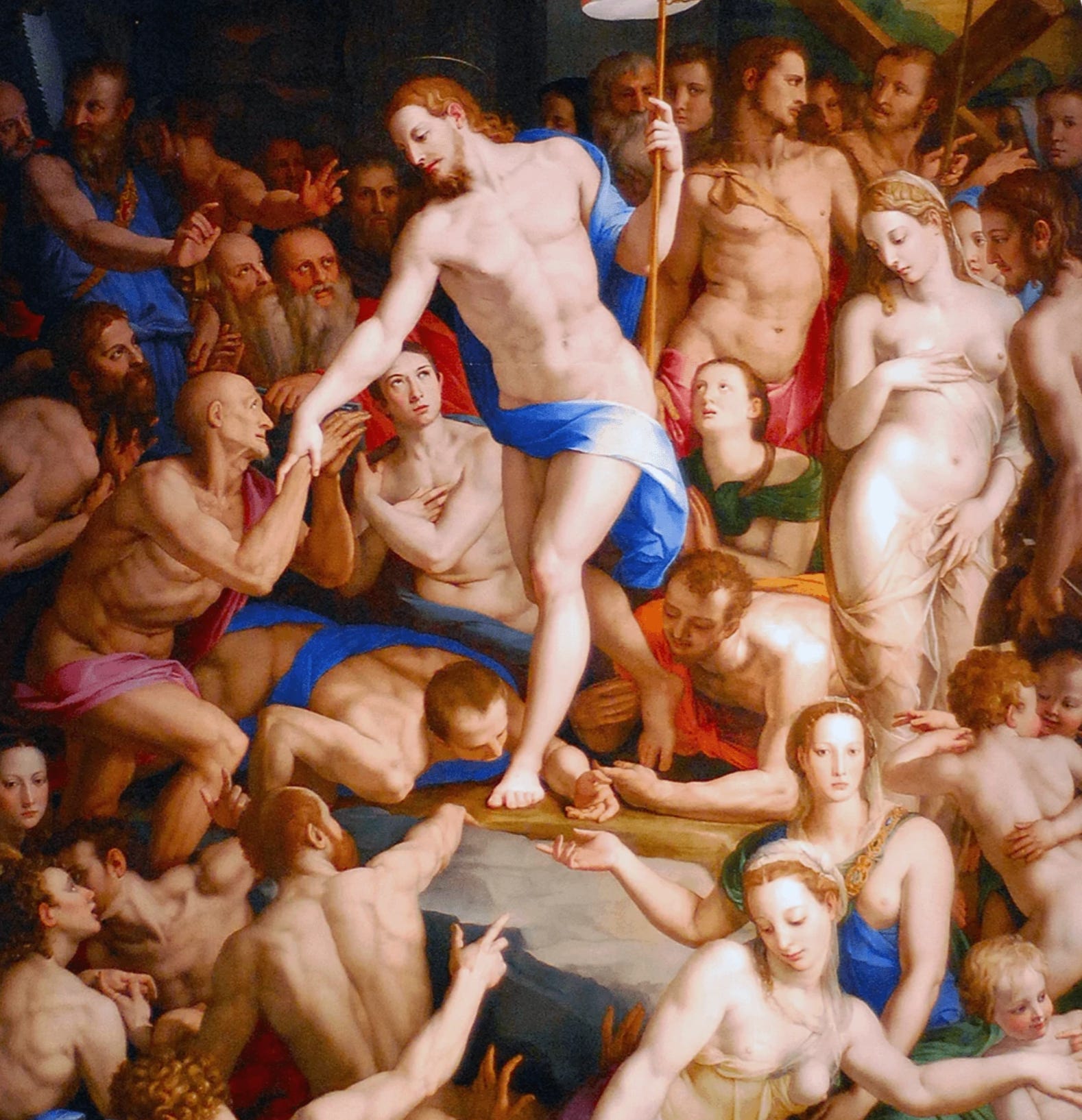
One of my professors told me the other day: it seems as though you’ve discovered the picture plane. Another told me that I’m caring more about the painting and less about the image. There are differences between form, material, and picture, but I am unsure of which subsumes which. My growing fondness for abstraction has revealed itself to be something of a pathetic relief, and for non objectivity an existential threat. Its imminence was foreshadowed early last year, when Elena Ferrante’s passages of “dissolving boundaries” in the Neapolitan series took a hold on me that never seemed to loosen its grip, remaining dormant until I saw it in certain images. How the musculature in Bronzino’s altarpieces reveal a line similar to the arabesque, extending beyond the frame of each body, turning figure into rhythm, and fact into feeling. It’s almost sacrilege to dissolve heavenly bodies into something as rudimentary as a line, but at the same time maybe that’s the entire point. In that sense Greenberg is wrong, and this Old Master wasn’t “preserving the integrity of the picture plane,” but doing away with it for the sake of the viewer’s pleasure, but things get really weird during mannerism, anyway.
She said that the outlines of things and people were delicate, that they broke like cotton thread. She whispered that for her it had always been that way, an object lost its edges and poured into another, into a solution of heterogeneous materials, a merging and mixing. She exclaimed that she had always had to struggle to believe that life had firm boundaries, for she had known since she was a child that it was not like that—it was absolutely not like that—and so she couldn’t trust in their resistance to being banged and bumped.
Elena Ferrante, The Story of the Lost Child, 2014
Last month, when I was asked to describe my paintings— which I felt totally unequipped to do— I instinctually said that I was looking for a place to rest. I had just finished a small still life that felt like a personal breakthrough. In allowing myself just the slightest bit of agency to break from the rigidity of what I observed (while still remaining, for the most part, observational) I was left with an image that felt to me like safety. Like I could crawl into the hue of the cast shadow, or tuck my limbs into the triangle between apple and grapefruit. The irony of the end product was that I often felt awful throughout the creation of the painting, but this stayed in my mind: a place to rest.
I saw a few of Susan Walp’s paintings at the In Company of: Still Life show at ArtYard in Frenchtown, NJ last weekend with another professor and some classmates. My professor had recommended I take a look at her work earlier in the semester, and of course, to see the 8x8 canvases inches away from my face elicited an excitement born out of extended anticipation and curiosity. It was a darling show, set up as a domestic interior with each gallery labeled as living room, dining room, foyer, etc. I saw Silas Borsos—his pear and grapefruit that had inspired my own stab at the beloved stone fruit. I admire his decisiveness. They had a library, with a catalog on Walp, who was at the New York Studio School in 1971 when Philip Guston lectured on Piero della Francesca:
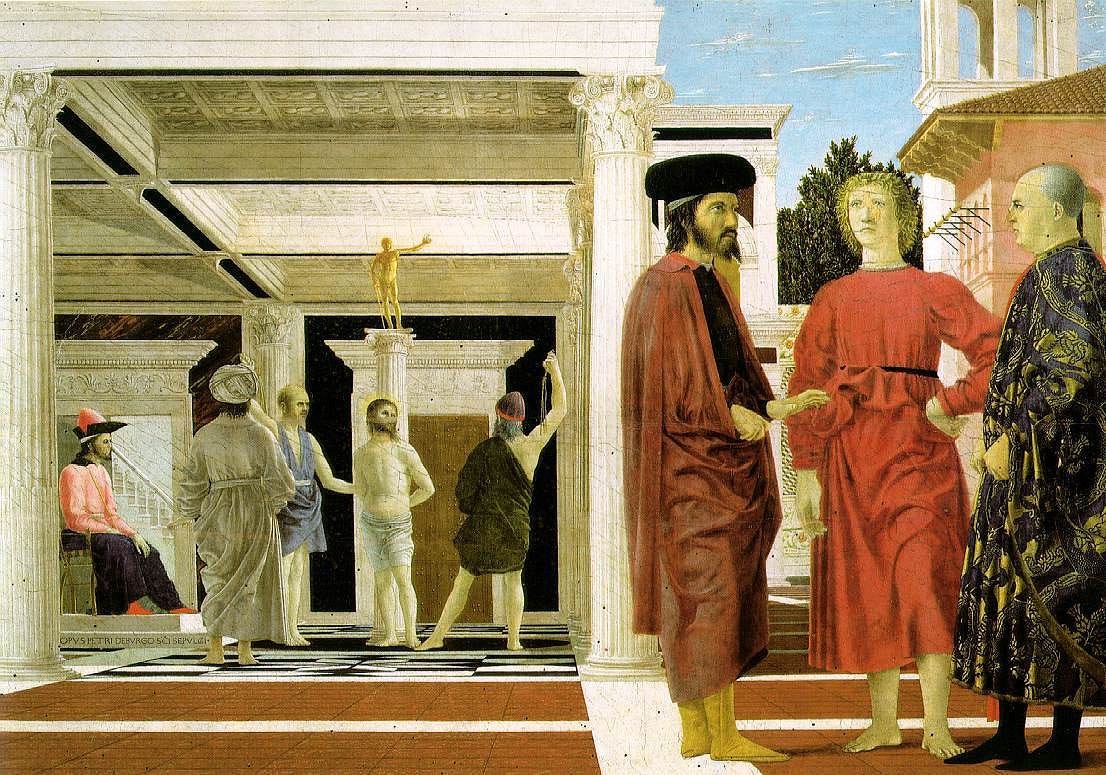
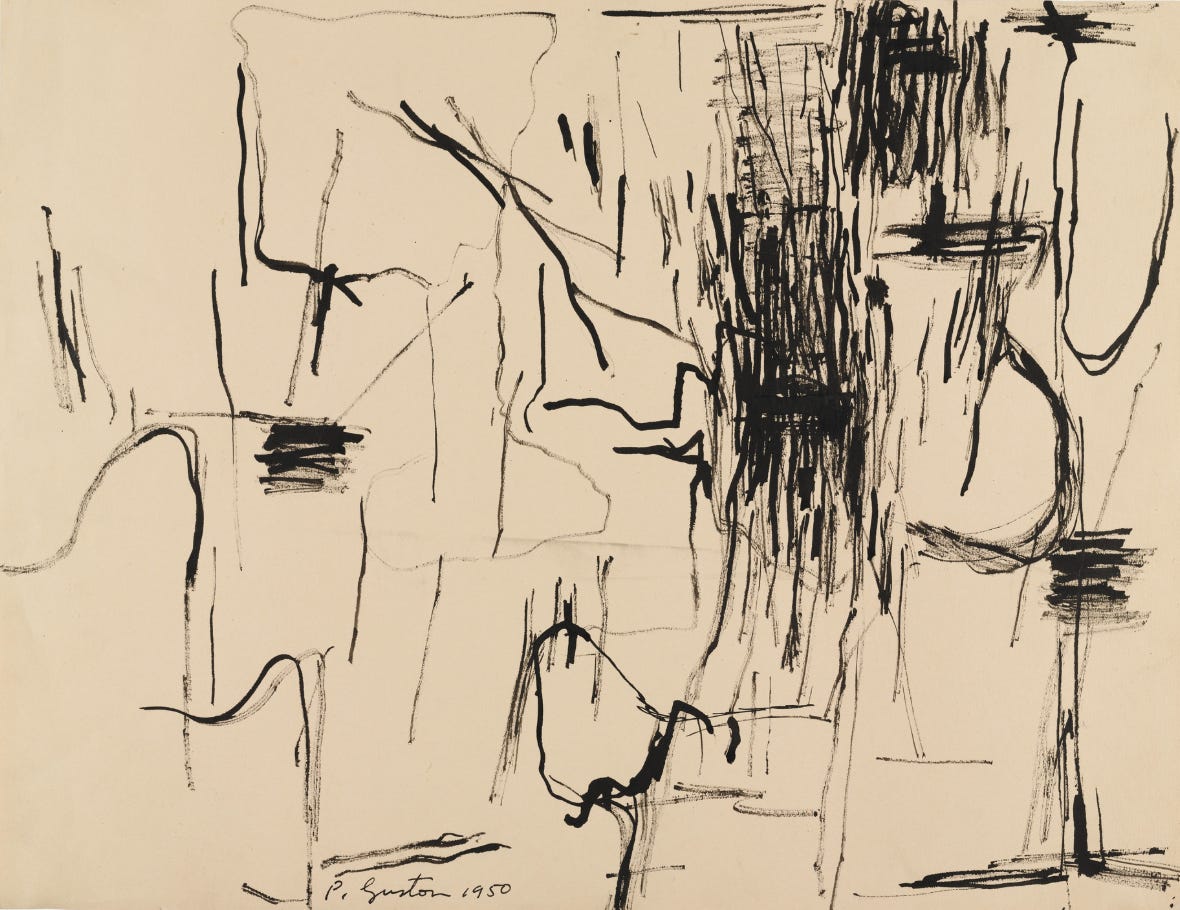
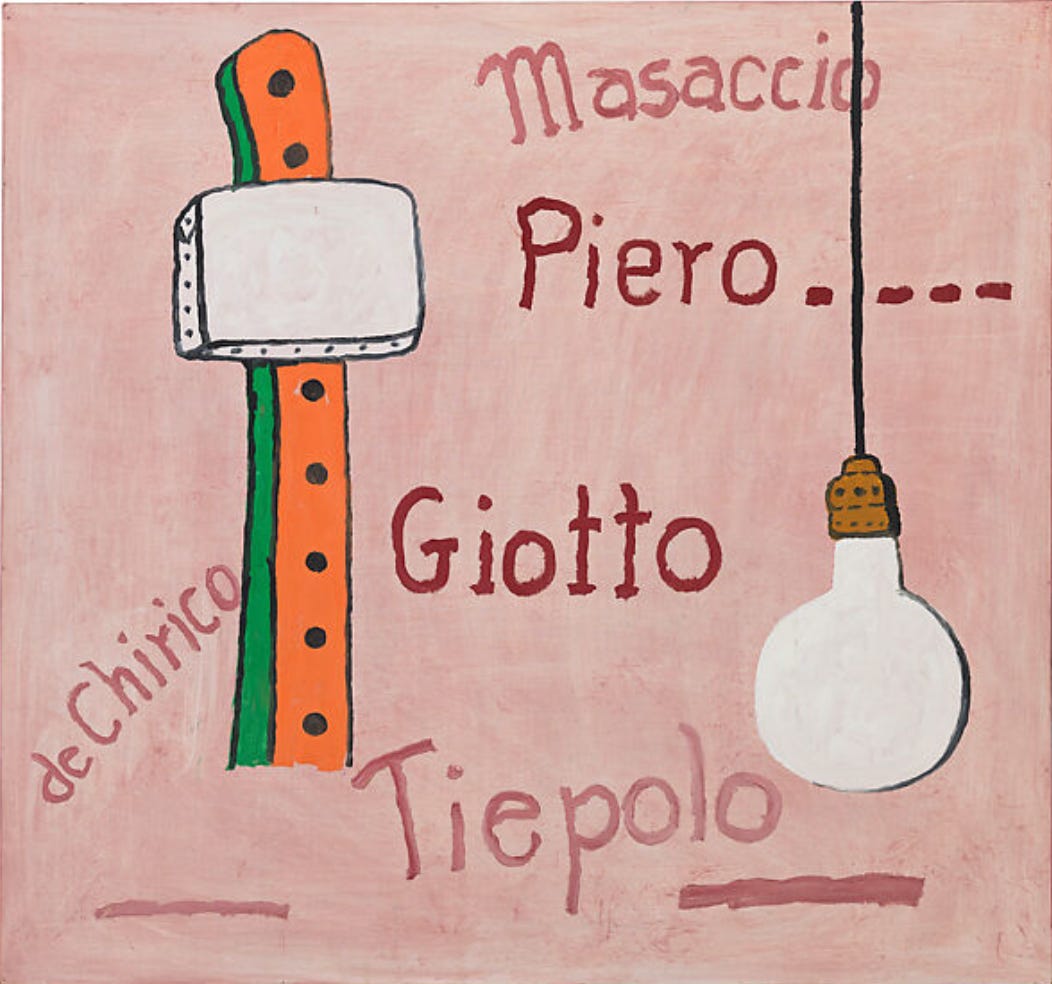
Because, in many minds, in thinking about painting, this rectangle on which we project an image or our expression of a nonimage, a nonobject image, is a surface upon which you can make a fixation of some kind of configuration. Well, that is not what I mean by the picture plane, because the picture plane, as I'll point out to you later when we show some slides, doesn't exist factually. Per se. That is to say, it's not a physical thing. It's not a material surface. It's totally an imaginary place, plane, which has to be created by illusions. Now what I mean by illusions is: if you put one color shape against another color shape, you're making an illusion. That's putting it very simply. Now, this imaginary plane... I like the word place because it's an illusive imaginary place where forms of this world, trees, people, furniture, objects, momentarily come to rest. No, erase that. Not "come to rest:' pause. I think my great attraction to Piero is a sense of pausing. That is, as if all these forms, these figures, could have an existence beyond this momentary pausing.
There is a certain comfort that excites when somebody who knows what they’re talking about articulates something you had only a vague inclination of, perhaps it’s the comfort of being understood. I find myself, while working on my research papers (which I am currently procrastinating by writing this), constantly asking my peers and advisors: does this make sense?
Walp on Guston on Piero:
What really interested me about how Guston spoke about Piero was that the picture plane to him was something imaginary. And that’s how Nick [Carone] talked about it too. Yes, on one hand it is the ordinary flat physical surface of the painting. But its deeper meaning is the place, the plane, where the forms of this world, that is the illusion of these forms that the painting creates, come forward to find their place, the place where they meet the world of the viewer. This is still something I am trying to understand.
Walp is a contemporary representational still life painter, Guston from New York’s abstract expressionist movement, and Piero an essential bridge from Gothic to Renaissance in 15th century Florence — each grappling with the same issue of recapitulation. You have to draw from something to create something else. I wonder what forms of this world meant to Walp, Guston, and Piero beyond just trees, people, furniture, and objects. It must also be the experience of them, how it feels to see and hear and touch these trees, people, furniture, and objects when you are under excruciating stress or completely depressed or totally in love: the forms of a subjective experience. The more I am producing work, the more I am paying attention to the forms of this world, the more momentum with which I am able to move through these subterraneous rooms to find that place of rest.
In drawing and painting recently, where the languages of Ozenfant, Uglow and Mérida have continuously circled back into my conscience, I am repeatedly struck with the issue of fragmentation (and not just formally). To construct a composition with these forms of the world requires that I fragment my experience into its constituent parts and regurgitate them onto a surface. What happens during fragmentation is a loss of recognition, and with a loss of recognition is a loss of consensus. Consensus is needed for mutual understanding and a sense of truth. The more I am invested in painting and its principles the less I am able to separate it from that of which I live. This has acquainted me with an idiosyncratic loneliness, which is both resolved and perpetuated within the picture plane.
Another Guston quote on Piero (1965):
A certain anxiety persists in the painting of Piero della Francesca. What we see is the wonder of what it is that is being seen. Perhaps it is the anxiety of painting itself.
This seems in complete accordance with Rilke, in his letter to Balthus sometime in the 1920s:
The pleasure of painting, of recapturing — in the slightly differing drama the painter stages for himself, making it emerge bit by bit on the canvas like an indefinite crisis in the process of being resolved… The eroticization of imminence which is the very essence of both encounter & disappearance.
Guston points to a Heideggerian type of anxiety, which is just the uncanny state between somethingness and nothingness— Rilke’s interpretation of painting gives voice to this anxiety through the cycle of “encounter and disappearance.” The painter is anxious. At least, this painter (me) is anxious.
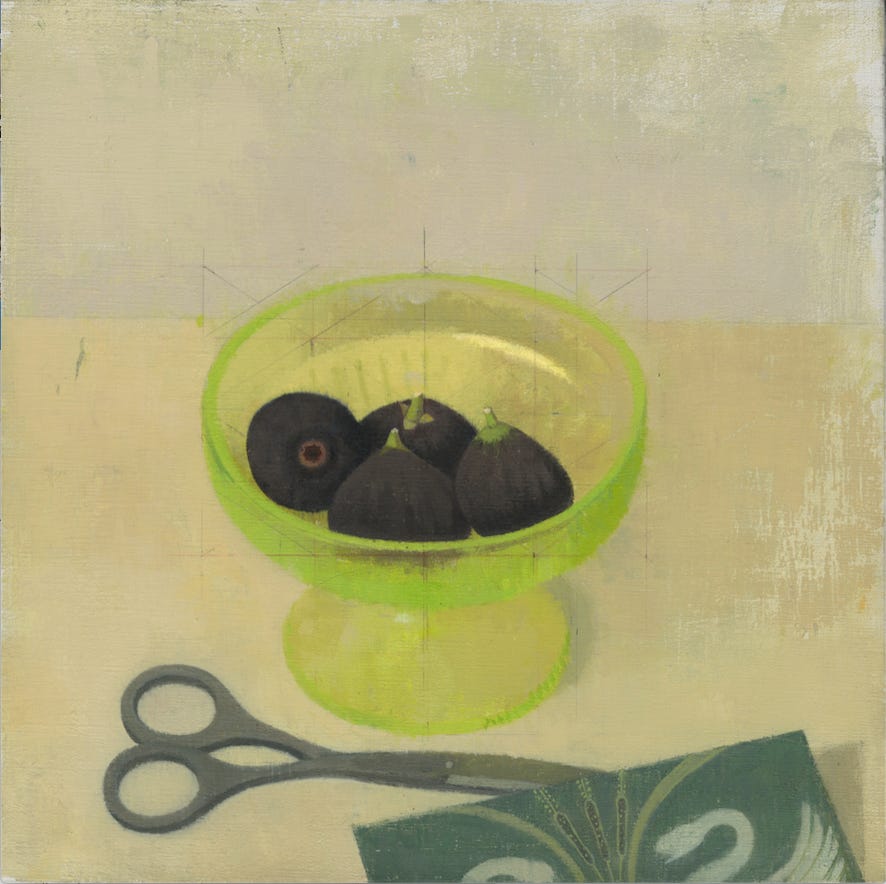
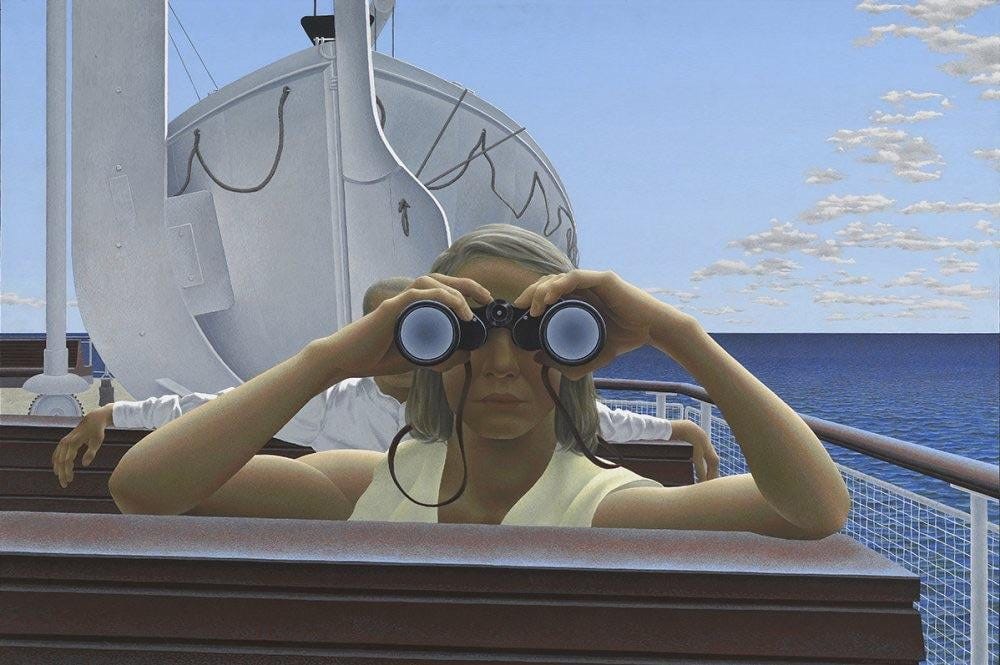
Besides the act of painting, there was always something incredibly uncanny about the early/proto Renaissance I could never put my finger on. It’s this bizarre hybrid between gothic and perspectival space, vague intention of naturalism that intentionally never arrives. But Piero takes it and runs with it more than anyone else in a way that makes sense why he should resonate with modern/contemporary sensibilities. The imaginary picture plane in his paintings is palpable, and likens itself more to the work of Alex Colville than any remote Florentine contemporary (though Fra Angelico is close). I most definitely see this anxiety in Walp, the way her guidelines occupy same plane as her figs and bowls.
Painting really freaks me out because of this, even more so now as I lessen my grip on the academic tradition. Lately it has felt like passing through rooms that keep caving in and rebuilding, searching for something that will last. Sometimes with attentiveness, sometimes with languor, sometimes with panic. Last year, as my lines began to loosen while drawing monuments and master copies in Rome, another professor said that my hand is nervous, and that it wants something it is afraid of losing. I don’t know what it wants and I don’t know what it’s losing. But it is most definitely wanting and losing. Discovering the picture plane (as my professor coined it) seems like I’m getting a little bit closer, though.
Cool~ I also studied drawing once, at an art academy. Only for about a month though 😄 This was a bit difficult for me to understand, but interesting nonetheless ✨
Lovely